
Newsletter Volume 10, Issue 4 December 2025
From the persons in charge
As we conclude 2025, it is inspiring to reflect on the progress and innovation showcased throughout this year’s IPA Newsletters. Our 10th anniversary edition highlights the pivotal role of press-in technology in advancing sustainable construction, progress on SDGs, cutting-edge R&D in deep foundations, and technical breakthroughs such as the GEOTETS method and eco-friendly soil stabilization. The June issue emphasized global challenges, including population decline, labor shortages, and political instability, affecting civil engineering. It features innovative piling techniques in Vietnam, the Combi-Gyro method in Japan, and young member research on coastal scour. This issue presents the press-in method as a solution to evolving construction demands. It also includes information about a seminar on offshore wind power development, reinforcing IPA’s commitment to advancing technology and collaboration. The September 2025 issue highlights IPA’s commitment to resilience and sustainability in press-in engineering. Key features include research on soil liquefaction, the interaction between rigid sheet piling and soil, and innovations in precast pile testing.
The current issue highlights Amsterdam’s Quay Walls Innovation Partnership, which won the IPA Outstanding Project Award at ICPE2024. This pioneering project shows how public authorities and market partners can work together to create sustainable infrastructure solutions. By using the Gyropress Method™ and fully electric equipment, the project achieved low noise and vibration, protected heritage assets, and reduced CO₂ emissions, setting a standard for urban renewal. We also include an event report from DFI India 2025, where press-in technology was introduced to India’s deep foundation community, marking a significant step towards vibration-free and noise-free construction in rapidly expanding markets. Technical articles in this issue explore the seismic stability of geogrid-reinforced soil walls and the effectiveness of soil nails in enhancing resilience, offering critical insights for infrastructure safety in earthquake-prone regions. A case study from Brazil further demonstrates the environmental and operational benefits of press-in piling for tailings dam containment, confirming its suitability for sensitive geotechnical environments.
This year, we marked milestones such as the first African seminar in Tunisia and continued to broaden global engagement through technical exchanges and events. These efforts reaffirm IPA’s dedication to promoting innovation and meeting changing societal needs through advanced construction methods.
As cities worldwide face ageing infrastructure and climate challenges, the examples in this issue provide a roadmap for sustainable renewal. IPA remains dedicated to promoting technologies that are not only efficient but also environmentally responsible. Lastly, on behalf of the editorial team, we sincerely thank all contributors and readers for their unwavering support throughout 2025. Wishing you a joyful Christmas and a prosperous New Year filled with innovation, collaboration, and success. May 2026 be a year of fruitful endeavors and ongoing progress for the global press-in community.
 |
 |
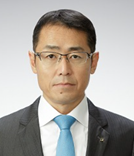 |
| Dr. Adnan Anwar Malik Head of STEM, Senior Lecturer Newcastle Australia Institute of Higher Education Singapore – The University of Newcastle Australia |
Dr. Nor Azizi Bin Yusoff Senior Lecturer, Universiti Tun Hussein Onn Malaysia(UTHM) |
Mr. Tsunenobu Nozaki General Manager, GIKEN LTD. |
| << Previous | Newsletter Top | Next >> |