
Newsletter Volume 11, Issue 2 June 2026
Groundwater control during deep MRT station excavation in Bangkok
TEAM Consulting Engineering and Management PCL., Bangkok, Thailand
1. Introduction
For decades, the city of Bangkok has been synonymous with rapid urban growth and a unique geotechnical challenge: its soft, marine clay subsoil. Historically, the city faced severe land subsidence due to the massive extraction of groundwater from its underlying sand aquifers. However, following the implementation of the Groundwater Act and a shift toward surface water supplies, the city has seen a remarkable turnaround. While this is a victory for environmental stability, it has created a new complex reality for underground construction. Piezometric pressures in the deep sand aquifers have been rebounding, rising steadily over the last several decades. For the engineers of the MRT underground projects, this meant designing and excavating stations in an environment where groundwater levels are much higher than in years past.
The Mass Rapid Transit Authority of Thailand (MRTA) initiated the MRT Orange Line Project to enhance the city’s transit network and improve the quality of life of its residents. MRTA has awarded the underground civil works for the East Section of the MRT Orange Line to the CKST Joint Venture, comprising Ch. Karnchang PCL and Sino Thai Engineering and Construction PCL. Construction began in May 2017 and was completed in 2022, features approximately 9.73 km of tunnels and seven underground stations. Excavating these stations, particularly those using the top-down construction method, required sophisticated groundwater management strategies. The primary concern was hydraulic uplift failure - a phenomenon where high water pressure in a permeable sand layer beneath the excavation can “blow out” the impermeable clay layer above it if the pressure exceeds the weight of the remaining soil.
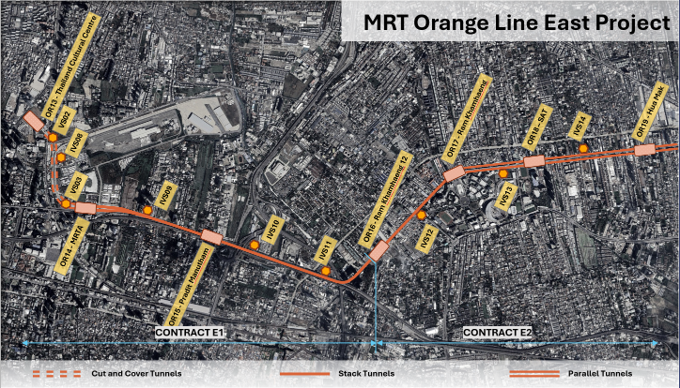
Fig. 1. MRT Orange Line East Project Contract E1 and E2
2. Groundwater Control Methods
To ensure stability, the project team employed a variety of technical solutions tailored to the specific soil conditions of each station
- Staged excavation approach: To implement a staged excavation approach, the base slab excavation is carried out in smaller sections, surrounded by a higher soil surcharge and a concrete slab around the perimeter. This method enhances stability by increasing side shear resistance along the perimeter, in contrast to excavating a larger base area. At OR19 Hua Mak Station, hydraulic uplift stability posed a concern for the excavation works. The factor of safety against hydraulic uplift stability was marginally below the required level due to excessive groundwater pressure in the 2nd Sand Layer. The staged excavation approach was modified and successfully executed, with the factor of safety against hydraulic uplift stability calculated by considering friction resistance along the smaller strip excavation. The staged excavation was completed without issues related to uplift stability.
- Extension of unreinforced D-wall: In situations where structural D-walls are situated in thick sand layers, excavating in sand with high piezometric pressure may pose safety risks. If a stiff clay layer (impermeable layer) lies beneath the thick sand, the toe of the D-wall can be extended to penetrate these impermeable layers to cut off groundwater pressure within the excavation area.
- Ground improvement: Ground improvement is also one of the most common methods to treat the ground and create a watertight barrier. In Bangkok, Tube-A-Manchette (TAM) grouting and jet grouting are widely used. TAM grouting is an effective chemical grouting method used to reduce the permeability of sand layers. TAM grouting can be applied in a blanket arrangement and/or at D-wall joints, acting as a watertight barrier within the excavation area. Moreover, to address potential leaks at D-wall panel joints, TAM grouting can be applied to the outer joints to prevent water from seeping through any D-wall gaps. Jet grouting can be employed in a blanket arrangement to create a watertight barrier within the excavation area. The thickness of the jet grout blocks needs to be assessed based on three modes of failure: punching shear, shear stress, and bending stress. High-pressure cement grouting is normally used to enhance soil strength and watertightness.
- Deep Well Dewatering: Dewatering is essential for lowering the water table and creating stable, dry conditions suitable for construction. By installing pumps inside the excavation area, engineers could lower the water table within the station box to at least 1 meter below the excavation surface, ensuring a dry and safe working environment.
3. Case Study Example at Ram Khamhaeng (OR17)
Ram Khamhaeng Station (OR17) provides a prime example of these strategies in action. This is a deep-stacked station with an excavation depth reaching 34 meters below the ground surface, situated in a thick, dense sand layer. The technical approach included:
- Extending D-walls to the third stiff clay layer (impermeable layer)
- Utilizing TAM grouting at the panel joints to prevent seepage
- Installing deep well pumps to manage any potential leakage caused by the verticality of the D-walls at such great depths
Before the actual excavation began, the project team conducted rigorous field pumping tests, which typically involve pumping water at a constant rate for 72 hours. These tests are the most reliable way to determine the realistic hydraulic conductivity of the soil. At OR17, a pumping test at a rate of 55 m3/hr drew the water level down to 39 meters within 20 hours. This confirmed that the D-walls were effective and that any leakage was within a controllable limit. However, the test also revealed that groundwater recovered very fast-rebounding 10 meters within just one hour of stopping the pump. This data emphasized the absolute necessity of backup pumps and emergency response plans during construction.
By analyzing the data from these pumping tests and subsequent dewatering records, engineers were able to use a “back-analysis” approach to estimate the required number of deep wells for each station. Interestingly, the findings showed that the number of pumps needed was not directly related to the thickness of the sand layer. Instead, it depended heavily on the workmanship of the D-wall construction, specifically whether gaps were large enough to allow seepage.
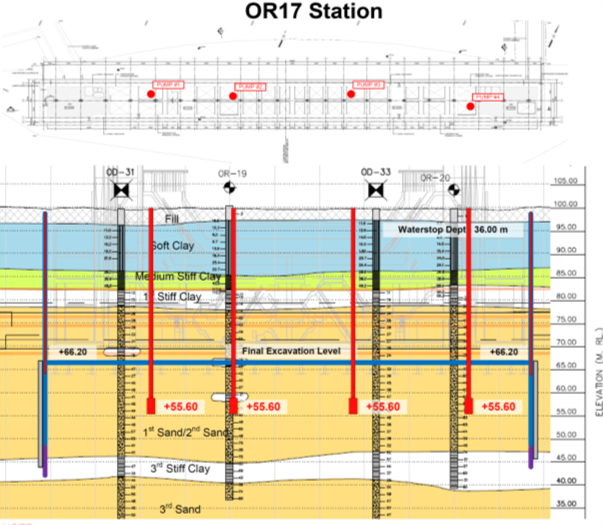
Fig. 2. Plan and Section of OR17 with Geology
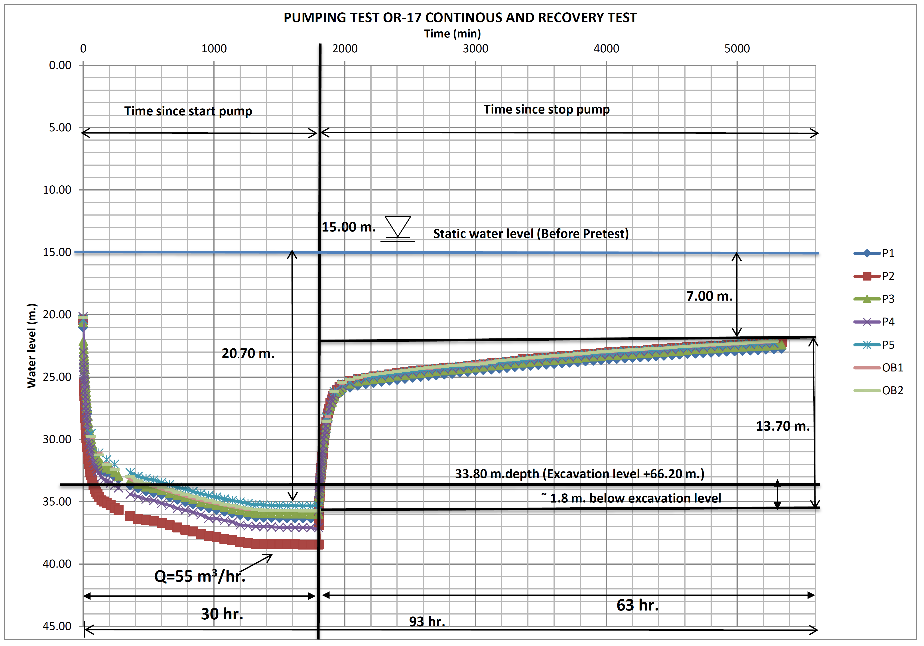
Fig. 3. Pumping Test Results at OR17 Station
4. Conclusion
The successful completion of the MRT Orange Line East Project in 2022 demonstrates that even with a rising water table, deep excavation in Bangkok can be executed safely. The combination of watertight diaphragm walls, strategic grouting, and precisely calibrated deep well dewatering has set a new standard for the industry.
These insights are already proving invaluable for current and upcoming underground projects. As Bangkok continues to expand its underground infrastructure, the lessons learned from the Orange Line East project will serve as a critical reference for engineers navigating the city’s complex and ever-changing hydrological landscape.
5. References
Aye, Z. Z., Boonyarak, T., Thasnanipan, N. and Prongmanee, N. 2015. Diaphragm Wall Support Deep-Excavations for Underground Space in Bangkok Subsoil, Proceedings of the International Conference & Exhibition on Tunneling & Underground Space (ICETUS2015), 3-5 March 2015, Kuala Lumpur, Malaysia.
Kitiyodom, P., Wiriyatharakij, W., Asanprakit, A., and Yamchoo, A., 2023. Challenges in design and construction of Bangkok MRT Orange Line project. Geomechanics and Tunnelling 16, No. 3: 265–271.
Kitiyodom, P., Wiriyatharakij, W., and Yamchoo, A., 2023. Groundwater Control Measures for Deep Excavation of Bangkok MRT. Climate Change Adaptation from Geotechnical Perspectives: 201–212.
Phienwej, N., Giao, P.H. and Nutalaya, P. 2006. Land subsidence in Bangkok, Thailand. Engineering Geology, 82: 187-201.
Wiriyatharakij, W., Kitiyodom, P., Phienwej, N. and Yamsai U., 2025. Groundwater Control during Deep Bangkok MRT Station Excavation including Field Pumping Test Observation, ITA-AITES World Tunnel Congress 2025, Stockholm, Sweden
| << Previous | Newsletter Top | Next >> |