
Newsletter Volume 11, Issue 3 September 2026
Experience from the Jakarta Sewerage Development Project: Press-in Piling Construction in a Dense Urban Environment
The Jakarta Sewerage Development Project is currently underway to improve wastewater infrastructure in Indonesia's capital city. As the first project in Indonesia to apply the Hard Ground Press-in Method, it has attracted considerable attention. In this edition of On-site Interview Report, we interviewed Ms. Syifa Hanifa, a young site engineer supporting the project on the front line. Drawing on her experience and perspective from the site, she shared the project's challenges, key achievements, and the potential of Press-in technology for future infrastructure development.
1. Personal Background
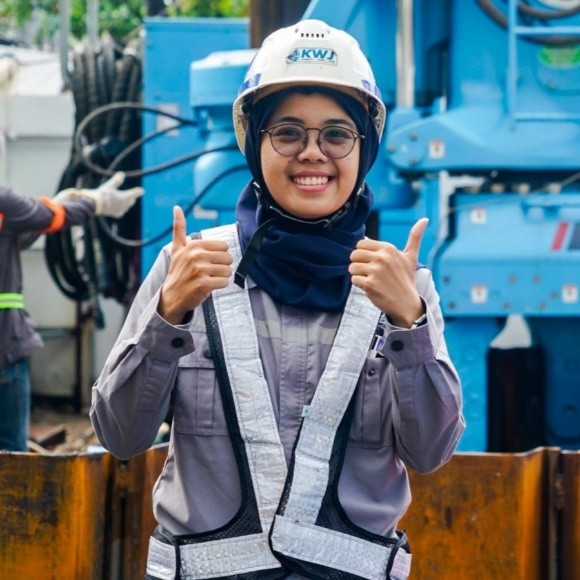 Photo 1. Ms. Syifa Hanifa at the project site
Ms. Syifa Hanifa is a Site Engineer at KUMAGAI GUMI CO., LTD., having joined the company in September 2025. Her daily work centers around site execution, site scheduling and planning, manpower planning, equipment scheduling, and managing ground engineering challenges.
She graduated with a Bachelor of Applied Science (B.A.Sc.) in Road and Bridge Design Engineering from Politeknik Negeri Bandung (Bandung State Polytechnic).
She has been working in the civil engineering and infrastructure sector for over 9 years, spanning key roles from Quality Control Officer, Contract Administration, and Cost Control Officer to Site Engineer across major highway, wastewater, and pipe/piling projects.
Since May 2022, she has been actively supervising and managing Press-in piling operations as part of her Site Engineer role on urban sewerage infrastructure projects.
Q. What inspired you to pursue a career in the construction industry?
A. What inspired me the most is a mix of personal background and my own working style. My father worked in the construction industry, so growing up, seeing his work and the tangible impact of construction projects really inspired me to follow in his footsteps.
On top of that, I’m someone who thrives in dynamic and flexible environments. I really enjoy hands-on work and adapting to new challenges, which makes working on site a perfect fit for my personality and career goals.
Q. What motivated you to move to your current company?
A. What motivated me was the opportunity for a new challenge in a multinational company. I wanted to elevate my career by working with a company that holds higher standards in both safety and quality. Furthermore, the strong safety culture and global professional environment here really align with my values and my drive for continuous learning.
Q. What is your current role and main responsibilities on this project?
A. As a Site Engineer, I oversee daily field execution, structural alignment, reporting of manpower and equipment usage, and managing site layout operations for Press-in piling works. My responsibilities include ensuring technical precision, maintaining safety and quality standards, and resolving site challenges smoothly in coordination with all project stakeholders.
Q. As a site engineer, what do you consider most important in managing a construction site?
A. For me, successful site management rests on three pillars: Uncompromising Safety, Technical Precision, and Adaptability under Pressure.
- Safety & Standards: Ensuring everyone strictly follows HSE (Health, Safety and Environment) protocols, to achieve a zero-accident project.
- Quality & Accuracy: Maintaining tight quality control from foundation execution to structural handovers.
- Team Synergy: Fostering clear communication and strong teamwork to navigate urban ground conditions safely and efficiently.
2. Project Overview
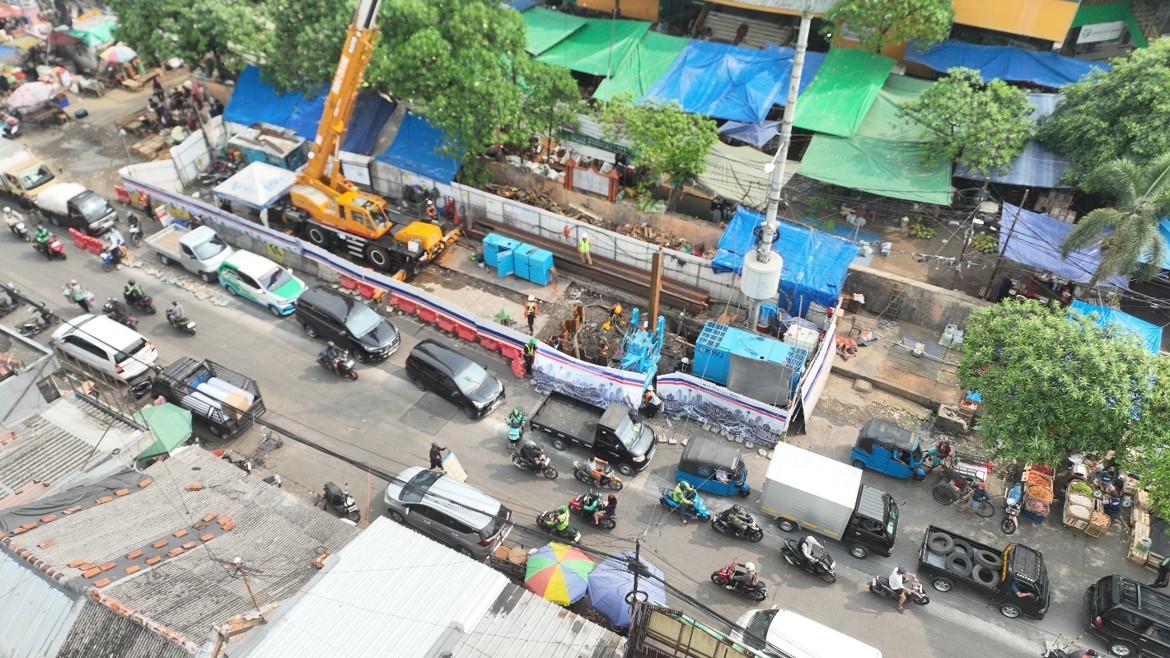
[Project Information]
|
Project Title
|
Jakarta Sewerage Development Project (Zone 1)
ICB Civil Works (Package 2) Construction of Sewers in Area 1-1 ICB Civil Works (Package 3) Construction of Sewers in Area 1-2 |
|
Location
|
Jakarta, Indonesia
|
|
Client
|
Directorate General of Human Settlements, Ministry of Public Works and Housing of Republic of Indonesia
|
|
Primary Contractor
|
Kumagai Gumi Co., Ltd., PT. WIJAYA KARYA(Persero), Tbk, PT. JAYA KONSTRUKSI MANGGALA PRATAMA, Tbk JV
|
(1) Project Background
Q. Could you briefly explain the purpose and overview of this project?
A. The Jakarta Sewerage Development Project is an underground centralized domestic wastewater management initiative by the Jakarta Provincial Government. The goal of this project is to modernize Jakarta’s wastewater infrastructure by collecting and treating domestic wastewater (from toilets, kitchens, and bathrooms) before it is discharged. This prevents sewage from contaminating local soil and surrounding groundwater.
Q. How do you think this project will benefit the people and communities of Jakarta?
A. The Jakarta Sewerage Development Project (JSDP) benefits local communities in three key ways:
- Cleaner Water & Better Health: Directs raw household sewage away from groundwater and rivers into treatment plants, preventing water contamination and cutting down waterborne diseases.
- Better Daily Living: Eliminates foul odors from open drainage canals and revitalizes neighborhood environments, directly improving quality of life for around 1 million residents.
(2) Selection of the Hard Ground Press-in Method
Q. We understand that the Hard Ground Press-in Method was adopted considering factors such as noise, vibration, and site conditions. What were the main reasons for selecting this method?
A. We selected this method primarily to optimize equipment usage. It saves us from needing two heavy machines (the pre-bore equipment and a vibratory excavator). More importantly, it is significantly safer for the public, as we are operating in a narrow space right next to some older structures.
Q. Did the adoption of the Hard Ground Press-in Method have any impact on the construction schedule?
A. When we selected this method, it caused a slight initial delay due to machine shipping and delivery. However, thanks to its high productivity, we were able to catch up on lost time and remain on schedule.
Q. What operational or management advantages have you experienced by using the Hard Ground Press-in Method?
A. From an operational side, this method is highly time-effective and ensures successful sheet pile installation with high accuracy.
(3) Project Progress and Challenges
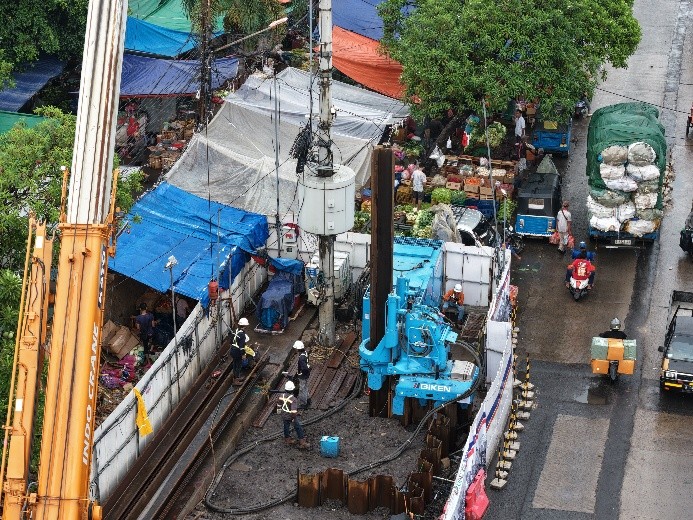 Photo 3. Sheet Pile Installation in Progress
Q. Has the project progressed according to the original schedule?
A. Compared with the original schedule, there were some delays due to third-party utility issues, technical site conditions, and social issues. However, we have already made a revised schedule, and we have to maintain this revised schedule.
Q. Were there any significant challenges during construction?
A. Yes, the primary challenges included navigating underground utility lines, managing soft or hard ground soil during sheet pile installation, constructing within very narrow workspaces next to existing structures, and addressing concerns from neighboring communities regarding work activity.
Q. What were the main causes of those challenges?
A. The main causes were unmapped underground utility networks, unpredictable subsoil conditions, constrained site boundaries with nearby old buildings, and high sensitivity from local residents regarding noise and potential ground vibration.
Q. How did you and your team overcome them?
A. We conducted test pits to locate utilities safely, conducted soil investigations and adopted the Hard Ground Press-in Method to minimize noise and vibration near old structures, and maintained active coordination with local stakeholders to resolve community concerns proactively.
Q. Were there any improvements or solutions that you personally introduced on site?
A. I made site layout coordination and lifting plan calculations to conduct sheet pile installation with SILENT PILERTM Equipment, established revised work schedules, and ensured real-time tracking of sheet pile driving progress to prevent further delays.
3. Looking Ahead: The Future of Press-in Technology
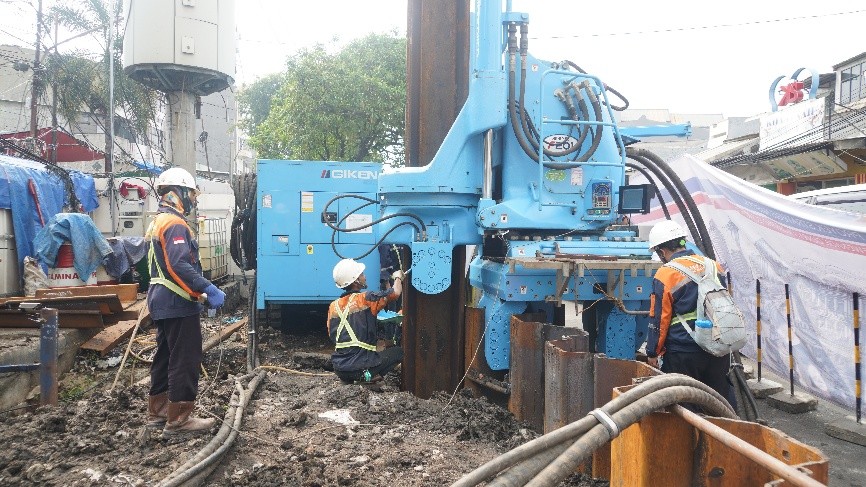 Photo 4. SILENT PILER operating at the project site
Q. What was your first impression when you saw Press-in technology (SILENT PILER) in operation?
Q. Based on your experience in this project, where else in Indonesia do you think Press-in technology could be useful?
A. It would be extremely valuable for dense urban infrastructure projects across major Indonesian cities (such as Jakarta, Surabaya, or Medan), especially for river revetment, flood control, and MRT/LRT underground works where space is narrow and surrounding old buildings or many utilities are present.
Q. Looking ahead, what would you like to see improved or further developed of Press-in Technology?
A. I would like to see more simplified support equipment to make site setup and layout management much easier in narrow spaces. Additionally, introducing real-time soil layer and texture monitoring systems during the pressing process would greatly enhance site control and geotechnical accuracy as work progresses.
Q. If you could share one piece of advice from this project with engineers in other countries, what would it be?
A. Never choose your piling method based solely on equipment cost. Evaluate the total site context. Investing in low-vibration, space-efficient technology like the Press-in Method pays off by preventing costly structural damage to adjacent properties, minimizing complaints from local residents, and ensuring overall project safety in constrained environments.
4. Reflections and Future Aspirations
Q. Looking back on this project, what achievement are you most proud of?
A. I’m most proud of successfully completing the deep shaft sheet pile installation through hard ground soil without major issues, all while managing a highly constrained site layout immediately next to a busy traditional market and in close proximity to major utilities (main distribute water pipe).
Q. Have there been any memorable experiences working with Japanese companies or Japanese engineers and operators? Have you noticed any differences in working styles or approaches?
A. It was a very memorable experience. The Japanese engineers and operators were friendly, approachable, and easy to share knowledge with, which allowed me to learn a great deal about the operation and capabilities of the Silent Piler system.
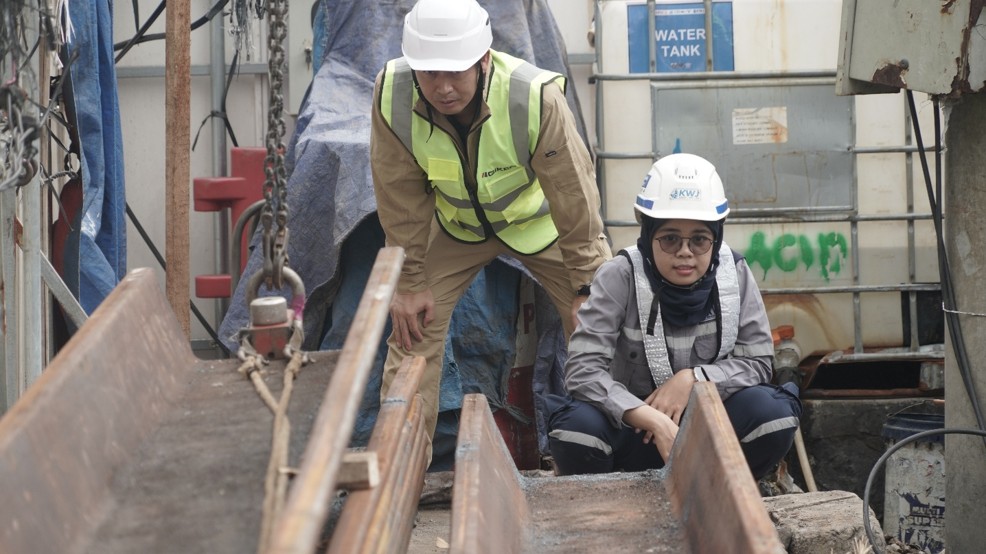
Photo 5. On-site inspection and technical discussion on site
Q. What challenges would you like to take on in the future, and what kind of engineer would you like to become?
A. In the future, I am very interested in taking on underground MRT construction projects. I aim to become an engineer who can blend technical mastery with practical site problem-solving to finish complex urban infrastructure safely and efficiently.
Q. If you had the opportunity to interact with engineers from around the world, what experiences or knowledge would you like to share? What would you like to learn from them?
A. I would like to share our practical site experience in conducting deep shaft excavation and sheet pile installation under strict urban constraints. In return, I want to learn how international engineers approach site problem-solving through a balanced evaluation of technical aspects, quality control, safety, and time management.
Q. Finally, do you have any message for young engineers who are starting their careers?
A. Learn as much as you can whenever you are on site, especially by developing critical and creative thinking to solve problems related to schedules, technical issues, and third-party challenges. Most importantly, work according to your passion and interests.
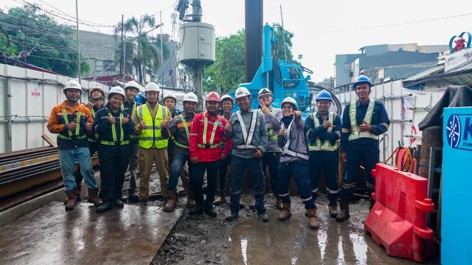
Photo 6. Project team members at the construction site
Editor's Note
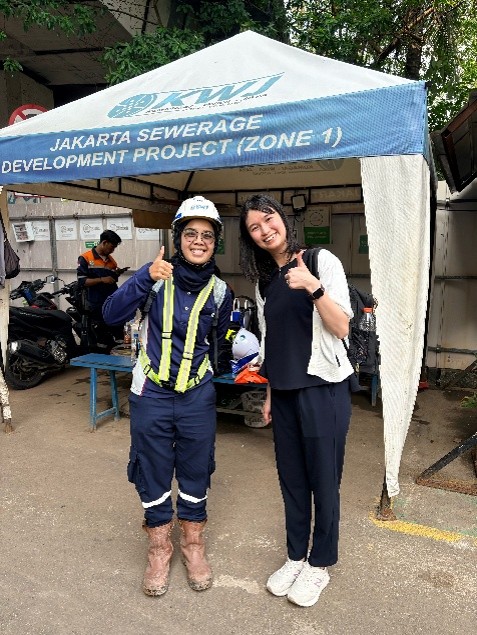 Photo 7. Commemorative photo with Ms. Syifa Hanifa at the project site
Before conducting this interview, I had the opportunity to visit the project site and meet Ms. Syifa Hanifa in person. What impressed me most was her positive attitude and the way she actively communicated with her colleagues while making her rounds on site.
As we said goodbye, she spoke enthusiastically about her wish to visit Red Hill in Kochi, Japan someday to see the latest Press-in technologies firsthand. Her genuine curiosity, passion for engineering, and eagerness to learn left a lasting impression on me. I look forward to seeing her continued success and hope to meet her again in Japan in the future.
I would also like to express my sincere gratitude to KUMAGAI GUMI CO., LTD. and Giken Seisakusho Asia Pte., Ltd. for their generous support in making this interview possible.
We Welcome Your Contributions!
We are looking for press-in piling engineers who are willing to share their experiences and unique project case histories through interviews. If you are interested, please contact the International Press-in Association Secretariat at:
tokyo@press-in.org
| << Previous | Newsletter Top | Next >> |